From the Enchanta journal
How to make a travel photo book
You came home with photos of the places you visited, the people you travelled with, and several versions of the same moment. Start by choosing the days you want to remember, then choose the photos that show them.
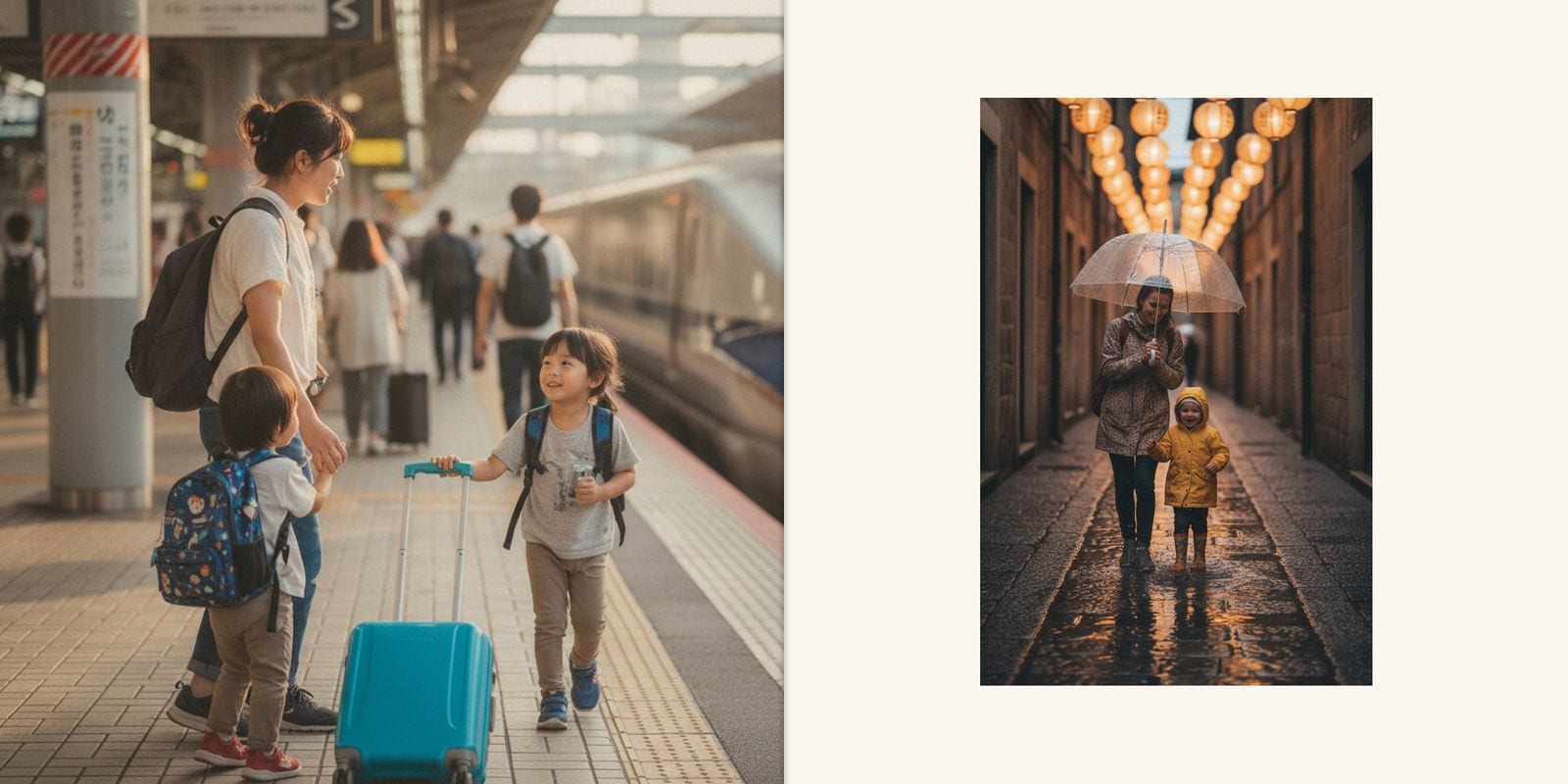
If you only need one answer
One trip, in order, cut to the moments you would miss. Keep the arrival and the ending, one frame per moment, and print it before the next trip starts its own pile.
What a trip actually leaves you
Worldwide, close to 300 photos a year are taken for every person alive, and a trip does not take its share of that evenly. Nobody photographs an ordinary Tuesday the way they photograph a first morning somewhere new. Then it all lands back among years of other photos and videos, where the trip stops looking like a trip and starts looking like more camera roll. The worldwide figure and its source are on the camera roll numbers page, checked September 18, 2026.
Choosing from that pile can stall a book. Most photo books die in the choosing, a few weeks after the plane lands, when the folder is still open and nothing has been cut from it.
A trip is a subject that arrives finished
Unlike a year, a trip comes with its own beginning, middle and end already in the photos. Before using the itinerary as your chapter list, decide which parts of the trip you want the book to show. Turning a big trip into a book is about finding the story the trip had rather than the route it took.
Where the book begins and ends
Fix the edges before you choose anything. Door to door is usually right: the packing, the airport at an unreasonable hour, the last meal. Include the packing and the journey home if they help you remember how the trip began and ended. How to end a photo book matters here more than in most books, because a trip has a real ending and it is almost never the last photo you took.
Chapters by day or place
The strongest travel books are chaptered by day or by place you stayed, not by sight seen. A chapter per landmark turns the book into a checklist, and it puts the best afternoon of the trip on the same footing as the cathedral you queued for and did not enjoy. Chapters covers how to find those divisions, and dates and places is how a book tells a reader where they are without captioning every page.
The cut, which is the actual work
Ask of each photo whether the book would lose anything if you removed it. Travel piles answer that faster than any other kind, because so much of what is in them is the same view photographed until it came out right. One moment, one frame is how to choose between near identical shots without stalling on each pair, and the questions an editor asks are what to use on the ones that survive that first pass.
It can be hard to leave out a landscape you got up early for, or a street you liked enough to photograph several times. What to do with the photos you cut is the answer to the fear underneath, which is that leaving a photo out of the book removes it. It does not.
Whose trip it was
Keep photos of the people who shared the trip and the places where you spent time. Check that the person behind the camera appears too. If you travelled with more than one household, one editor, not a committee explains how to gather everyone's photos while giving one person the final edit.
When the photos are spread across several phones, they have to be merged before any of this is possible. Photos from different phones is that step. If yours all live in one library already, making a book from Google Photos picks up from there.
What goes in besides photographs
Tickets, menus, the map with the pen marks, the note you wrote on the train. Travel album ideas is about how much of that a book can carry before it stops being a photo book, and what to write in a photo book is about the sentence or two per chapter that does more than any caption.
When the trip is bigger than one book
A month away, or a trip that changed character partway through, sometimes wants to be two volumes rather than one long one. When a book wants to be two covers the split. A two week holiday can also fit inside the family yearbook, as its own chapter, rather than in a book of its own.
Finishing it
Length follows the cut. How many photos a book needs sets the range, the photo book calculator turns a number of kept photos into pages and spreads, and the size chart covers what shape suits that length. A landscape trim suits a trip more often than it suits a family year, because so much of what you photographed was wider than it was tall.
Then paper and binding helps you choose a binding for how the book will be handled. Consider lay-flat for spreads you want to open across a table. The cover is the one page people see without opening anything, and a photo book as a gift is worth reading before you order one copy, since a trip taken with other people is a book several households want.
Questions people ask
How many photos should a travel photo book have?
Start with around forty to ninety kept photos, then adjust for the trip and the space each photo needs on the page. Keep enough to show the days, people and places you want to remember, with one frame for each repeated moment.
Should the book follow the itinerary?
Only where the itinerary was the story. A route is a useful spine for a trip that kept moving, and a poor one for a trip that sat still in one place, where the days are told better by what happened in them than by where they were.
What about the photos with nobody in them?
Keep the ones that say where you were, and cut the rest. A view you would recognise in a stranger's book is doing less work than a photo of your own people in front of it, and a book of views alone reads like a brochure.
We took photos on several phones. Can they go in one book?
Yes, but they have to be put back in order first. Photos of the same afternoon from two devices arrive with different clocks, different time zones and sometimes no location at all, so merging them is a step of its own rather than a detail.
Should a long trip be one book or several?
One, unless the trip was really two trips wearing one set of dates. The test is whether a reader would feel the book change subject halfway through. Several countries in one continuous run of days is one book; a month of work with a week of holiday attached is two.
When should it be made?
In the weeks after, while you still remember which photo was the good morning and which was the one where everyone was tired. That memory is what makes the cut fast, and it is the thing that fades first.
Enchanta is a private AI editor that turns your photos and memories into a beautiful printed photo book. It reads a trip, puts it back in order, cuts it to what you would miss, and composes a first draft you can change.
Join the founding waitlist